
by iNews
Share
by iNews
Share

By Olivia McAteer
For Tara, a respected dog trainer and behaviourist based inNorthern Ireland, the
decision to dedicate her life to understanding dogs didn’tcome from a textbook or a moment of sudden clarity. It came from heartbreak.
“It all started with a dog, obviously,” she says, laughing, “Achildhood dog that you fall in love with, you lose, and then, you decide you’re never doing anything like that ever again….and then you miss them so much that you think, ‘actually, I want to do that all the time; I want to learn more.’”
That single early relationship planted the seed. From there, apassion for dogs, behaviour and human- animal connection only grew.
Tara went on to study psychology at university, but from earlyon she was drawn to the animal side of things. She began tailoring her course toward animal cognition and behaviour,culminating in a final- year thesis completed at a dog rescue centre. “I had amazing support there,” she recalls. “One of my lecturers was running a PhD in behaviour; she was a dog person too and we’re still great friends.”
Initially, Tara was going to base her research in a rescue centre, but her mentor suggested a study based in a zoo setting instead: “I said, ‘Okay, I’ll do that,’ because I thought if you’re going to understand dog behaviour, then you need to understand animals first; that was my reasoning,” she says.
After completing her studies, Tara’s life took her in otherdirections— raising children, co-running a business—but the call back to working with dogs never faded. “Eventually, I just thought, this is where my heart lies,” she says. “I was lucky; we had staff in place at the business, so I could come back to what I loved.”
Tara now runs her own training academy, though she’s thefirst to admit it’s not as grand as it sounds. “I’d love to say it’s a proper academy, but it’s a church hall,” she says with asmile. “It’s only just
getting started, but the work we do there, that’s what matters.”
What sets Tara apart is her deep-rooted philosophy:prevention, not punishment. “If I can get them as puppies, then I can help build a really strong relationship early on,”she explains. “I’m not having to fix things that have already gone wrong.”
Classes are focused on the fundamentals—positivereinforcement, crate training, house training, body language, and communication—but it’s the trust Tara fosters between dog and human that lies at the heart of her method.
For older dogs with more serious issues, Tara offers one-on-one behaviour work, usually in the dog’s own environment. “That kind of work takes a lot out of you,” she admits. “Some of those dogs are
just trying to cope with the world they’ve been dropped into. I don’t like calling them ‘problem dogs’—they’re just dogs that are struggling to cope.”
She takes those cases seriously and cautiously, sometimesonly working with one behavioural case at a time. “They require time, consistency and patience…. and honesty—because some of these issues can take years to manage, not cure.”
Tara also runs a weekly event called Socialisation Saturday atVetsForPets on Longstone Street in Lisburn, which she describes as ‘pre-class puppy prep.’
“We get the puppies in and it’s just an hour to help people getto know their dogs,” she says. “We talk about body language,crate training, house training. It’s really just to preventproblems down the line.”
Tara’s experiences at Dogs’ Trust helped shape much of hercurrent thinking. Initially working in the office, Tara later assisted with getting dogs ready for rehoming—an experience that was both
rewarding and devastating. “The people would come in so excited, taking the dog home, full of good intentions,” she says. “But then a couple of weeks later, the dog would be back. And you just don’t
understand why.”
The frequency of returns surprised her. “It happened morethan you’d think. Maybe one in ten? I don’t know. I’d love to do a study on it—what is going on? Why are people bringing these dogs back?”
Some of the most challenging dogs Tara works with are thoselabelled as dangerous—often cases
involving biting or serious behavioural issues. She admits they’re tricky: “If I’m working with a dog that’s bittensomeone, I’ll never go in unless the dog is on a lead. I usually muzzle train them first, and I always talk to a vet if medication might be necessary.”
She is keen to point out that aggression is a last resort fordogs. “It’s always the four ‘F’s,” she
explains. “Freeze, Flight, Fiddle about or Fight. Fight is thelast one—they don’t want to bite. They just want to feel safe.”
The ongoing debate around XL Bullies and breed bans is one that Tara approaches with nuance. “When I was younger, Iused to say there’s no such thing as a bad dog—only badowners,” she says. “Now, I don’t think there are bad owners either; I think there are bad relationships.”
While she acknowledges that some breeds may have apredisposition to bite more, she
believes environment and upbringing play an even bigger role. “A lot of these dogs are being bred by people who don’t socialise them properly. They get dragged around and used as status symbols;
they’re not being taught how to live in a home.”
Tara has seen first-hand how these dogs, when abandoned orneglected, enter a new home already on high alert, primed to defend themselves. “They go into protection mode, and then something
happens… and it’s not the dog’s fault—it’s what it’s beenthrough.”
When it comes to new dog owners, Tara’s advice is simpleand essential. “Start with house training. Even if a dog is house-trained, if it moves into a new home, it’s likely to have an accident. Crate training is another big one—it teaches them how to be okay alone.”
She frequently deals with issues around loose-lead walkingand sees a worrying trend towards harsher training tools. “People are being told to use prong collars or shock collars. I don’t go near those;
there’s always a better way.”
Noise sensitivity is another concern that Tara tries toaddress early, particularly around fireworks. “You can justplay the sounds on YouTube or Spotify,” she says. “Givethe puppy a chew while it plays, and if they’reuncomfortable, turn the volume down. You build theirconfidence bit by bit.”
At the centre of everything Tara does, is a belief incommunication—real, mutual understanding
between dog and human. “Every dog is different, but they allwant to connect,” she says, “That’s what
makes them so unique. We’ve bred them to live alongside us,so we owe it to them to speak their language.”
Through education, empathy, and relentless dedication, Tara is building a future where dogs are not feared or misunderstood but respected for what they are: loyal companions doing their Best to live in a human world.”
Related Posts

By Henry Robinson NWRC journalism student and Derry City FC fanatic Niall O’Doherty has vowed not to cut his hair until his beloved Candy Stripes win three games in-a-row. The Derry City supporter took his inspiration from fellow football fan Frank Ilett, a Manchester United supporter, who pioneered the challenge on TikTok by refusing to

By Jason Le Masurier A Halloween family fun run/walk is being organised as part of the 30th anniversary of Derry’s Children-in Crossfire charity. The family-centred event on Saturday October31, starting at 10am,, will raise funds to support vulnerable children in Tanzania and Ethopia. Richard Moore, chief executive of Children in Crossfire, said
By Jason Le Masurier The Alley Theatre in Strabane is organising a colourful programme of workshops for children, families and adults, during the autumn at Strabane Library. From October through to December, the programme offers something for all ages and interests, from traditional crafts and upcycling to animation, ceramics, creative journaling, and festive making. Whether

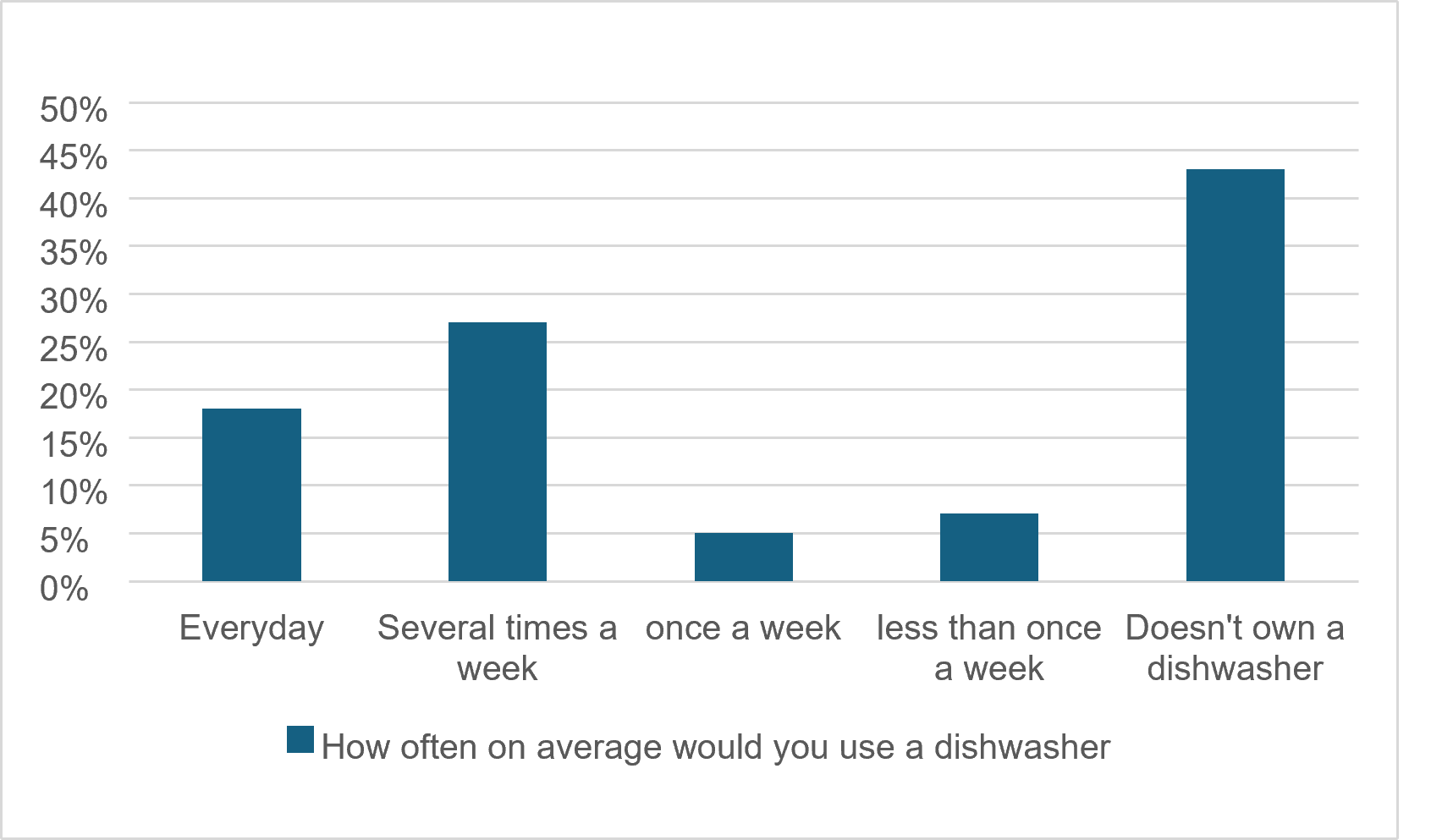
By Henry Robinson Almost half of all households in Northern Ireland don’t have a dishwasher, according to newly released figures. In the latest water usage survey, Northern Ireland Statistics and Research Agency has revealed that 43 per cent of households in Northern Ireland didn’t own a dishwasher, while only 18 per cent of households used